
OUR BLOG
Valued discussions with our team from wherever you are in your day
FEATURED
An Update on Equine Cushing’s Disease
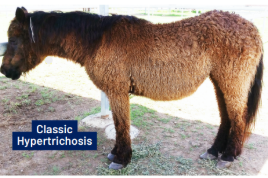
The prevalence of PPID increases with age. Approximately 20% of equids (horses, donkeys, and mules) over 15 years and 30% of equids over 30 years of age are affected by the disease. Clinical signs can be obvious in advanced disease (long hair coat, poor shedding, laminitis, muscle wasting, immune compromise) but may be more subtle in its earlier stages (mild muscle atrophy, delayed healing, infertility, increased urination/drinking). Treatment of the disease involves life-long management with a medication (pergolide) and management changes but if managed appropriately, horses with PPID can have an excellent quality of life.

Baled It! with Dr. Lauren Friedl
How to interpret hay analyses and what to do when there are hay shortages.

Getting Back to Better by Dr. Crystal Lee
Rehabilitation and return to performance after colic surgery, written by Dr. Crystal Lee for the Canadian Horse Journal.


Recognizing and Managing the Club Foot in Horses
Dr. Kirby Penttila discusses recognizing and managing the club foot in horses in the Canadian Horse Journal’s summer 2020 issue.

Fall Seminar 2019 - The Events of Normal Foaling
Dr. Jennifer Morrissey goes over the details of what you need to know: how to tell that your mare might be about to foal, what happens in a normal foaling, and how to monitor your mare and foal after the birth.

EOTRH: a dental disease in the elderly equine
EOTRH stands for Equine Odontoclastic Tooth Resorption and Hypercementosis. It is a painful condition affecting the dental tissues of the incisors and canines (front teeth). Most commonly, it is diagnosed in older horses (>15 years old).

Proactive Winter Horse/Donkey/Mule Care
Winter in this country is a beast. As I write this, we are into our 4th blast of snowy and cold weather already this fall (did I count right?), and it seems that winter is already well on its way to settling in. So a blogpost about proactive winter horse care may already seem a little past tense, but if you’re like me and living in denial that summer is already well past and fall quickly disappearing, you will have a few horse health care items to check off your list!


Fall Seminar 2018 - Hot Topics in Equine Medicine
Dr. Erin Kolodziej gives an update on disease outbreaks in Alberta in 2018, as well as the newest products in joint injections and wound dressings.

Fall Seminar 2018 - Understanding PPID: What is Equine Cushing's Disease?
Dr. Amelia Whitelaw gives an overview of Equine Cushing's Disease, how we diagnose it, and what can be done to effectively treat it.

Fall Seminar 2018 - A Vet's Perspective on the Equine Athlete
Dr. Kirby Penttila discusses the many aspects of care that go into ensuring an equine athlete is prepared for competition.

Understanding PPID
Many people have heard of PPID or Equine Cushing’s Disease, but it can be a difficult disease to fully understand. By reading this blog post you can better understand what PPID means, how PPID presents clinically, how we can diagnose PPID, and what we can do to manage our PPID patients.
TOPIC SUBMISSIONS
Want to learn more about a specific topic? Email your ideas to our team: office@burwashequine.ca
Archive
-
Breeding
- Mar 6, 2018 Placentitis - a reason for monitoring your pregnant mare
- Mar 6, 2017 Breeding Your Mare
- Mar 20, 2015 Breeding Your Mare: A behind-the-scenes look at the science of mare reproduction
- Nov 19, 2014 Fall Seminar 2014: An Introduction to the World of Reproduction
- Nov 10, 2014 Stallion Semen Freezing
- Oct 16, 2014 Pregnant Mare Management
- Apr 24, 2014 Breeding Your Mare
-
Dentistry
- Jan 25, 2020 EOTRH: a dental disease in the elderly equine
- Nov 25, 2019 Proactive Winter Horse/Donkey/Mule Care
- Jan 22, 2017 What happens to wild horses that don't get dental care?
- Apr 25, 2014 Equine Dentistry: Why Equine Veterinarians are Uniquely Qualified
- Apr 25, 2014 A Guide To Equine Dental Care
-
Deworming
- Nov 25, 2019 Proactive Winter Horse/Donkey/Mule Care
- Feb 13, 2015 Nasty Little Parasites - An Update on Deworming
- Oct 16, 2014 Parasite Control Recommendations
-
Emergencies
- Aug 29, 2024 Equine Emergencies
- Sep 1, 2021 Getting Back to Better by Dr. Crystal Lee
- May 8, 2016 First Aid Seminar - Part 2
- May 8, 2016 First Aid Seminar - Part 1
- Apr 15, 2016 First Aid Seminar Slides
- Oct 5, 2014 Brio - Heel Bulb Laceration
- Apr 27, 2014 Stone - Septic Tarsal Sheath
- Apr 27, 2014 Luke - Puncture Wound from a Nail in the Foot
- Apr 26, 2014 Roy - Carpal Laceration
- Apr 23, 2014 Be Prepared for an Equine Health Emergency
-
Foals
- Apr 17, 2020 Fall Seminar 2019 - The Events of Normal Foaling
- Mar 6, 2018 Placentitis - a reason for monitoring your pregnant mare
- May 24, 2016 My Newborn Foal
- Apr 16, 2016 When Foaling Is Imminent
- Apr 6, 2016 When is my mare going to foal?
-
Lameness
- Mar 14, 2023 Steve with no sole
- Nov 24, 2022 Regenerative Medicine and Orthobiologics
- Jun 1, 2022 Osteoarthritis by Dr. Katy White
- Jul 1, 2020 Recognizing and Managing the Club Foot in Horses
- Jul 1, 2018 Defying Age
- Jan 23, 2016 Fall Seminar 2015 - Update on the Lameness Locator
- Sep 13, 2015 Focus on Lameness - Imaging
- Sep 13, 2015 Focus on Lameness - Lameness Locator Demonstration
- Sep 13, 2015 Focus on Lameness - The Lameness Locator
- Sep 13, 2015 Focus on Lameness - General Lameness Exam
- Apr 11, 2015 Equine Lameness Evaluation
- Mar 25, 2015 Wireless inertial sensor based objective lameness evaluation - seminar slides
-
Medicine
- Dec 27, 2024 Why Your Horse Needs Vitamin E
- Aug 29, 2024 Equine Emergencies
- Nov 24, 2022 Regenerative Medicine and Orthobiologics
- Jun 1, 2022 Osteoarthritis by Dr. Katy White
- Feb 1, 2022 Respiratory Disease Round-Up
- Nov 13, 2019 Strangles
- Dec 20, 2018 Understanding PPID
- Jul 1, 2018 Defying Age
- Feb 1, 2016 Fall Seminar 2015 - Equine Infectious Anemia
- Sep 16, 2015 Flor - Pituitary Pars Intermedia Dysfunction (PPID)
- Nov 21, 2014 Fall Seminar 2014: Pigeon Fever Updates
- Nov 4, 2014 Fall Seminar 2014: Common Conditions of the Equine Eye
-
News
- Nov 24, 2022 Regenerative Medicine and Orthobiologics
-
Podiatry
- Mar 14, 2023 Steve with no sole
- Jul 1, 2020 Recognizing and Managing the Club Foot in Horses
- Nov 12, 2016 Fall Seminar 2016 - A Snapshot of the Horse's Foot - Equine Podiatry
-
Prepurchase Exams
- Nov 5, 2016 Fall Seminar 2016 - An Overview of Prepurchase Exams
- Apr 23, 2014 The pre-purchase exam: A wise investment
-
Surgery
- May 14, 2025 Nodin - Incisor Wiring
- Sep 1, 2021 Getting Back to Better by Dr. Crystal Lee
- Sep 26, 2018 Colic Surgery
- Oct 14, 2015 Misty - Enucleation surgery
- Sep 21, 2015 Junior - Sarcoid removal
- Sep 8, 2015 Sugar - Skin Grafting
- Aug 31, 2015 Dan - Third Eyelid Removal
-
Vaccines
- Nov 25, 2019 Proactive Winter Horse/Donkey/Mule Care
- Nov 13, 2019 Strangles
- Nov 5, 2016 Fall Seminar 2016 - An Update on West Nile Virus and Rabies in Alberta
- Feb 9, 2016 Fall Seminar 2015 - Vaccines
- Apr 30, 2015 Vaccination FAQ - What are common side effects of vaccination? What can I expect after my horse is vaccinated?
- Apr 28, 2015 Why We Vaccinate - Equine Herpesvirus (“Rhinopneumonitis”)
- Apr 24, 2015 Vaccination FAQ - Why are horses vaccinated for tetanus yearly, whereas humans are boostered every 5-10 years?
- Apr 23, 2015 Vaccination FAQ - Why is the Strangles vaccine intranasal? Isn’t there an intramuscular vaccine available?
- Apr 22, 2015 Rabies in Alberta—Should We Be Vaccinating Horses?
- Apr 21, 2015 Why We Vaccinate - Equine Influenza
- Apr 19, 2015 Vaccination FAQ - Potomac Horse Fever?
- Apr 18, 2015 Vaccination FAQ - Is it better to give multiple vaccines on one date, or split them into different visits?
- Apr 17, 2015 Vaccination FAQ - My horse needs his hocks injected, and while you are here, could we vaccinate him as well?
- Apr 16, 2015 Why We Vaccinate - Strangles
- Apr 14, 2015 Vaccination FAQ - Is it okay to ride my horse immediately before or after he or she is vaccinated?
- Apr 13, 2015 Why We Vaccinate - West Nile Virus
- Apr 12, 2015 Vaccination FAQ - Can I have my horse vaccinated if (s)he has a mild “cold?”
- Apr 11, 2015 Why We Vaccinate - Eastern & Western Equine Encephalitis (“Sleeping Sickness”)
- Apr 11, 2015 Vaccination FAQ - My horse is vaccinated—why did it still get a cold?
- Apr 9, 2015 Why We Vaccinate - Tetanus in Horses
- Apr 7, 2015 Vaccination FAQ - My horse doesn’t go anywhere—does (s)he still need to be vaccinated?
- Apr 6, 2015 What's in my vaccine?
- Apr 14, 2014 Vaccination Protocols
-
Wellness
- Jun 1, 2022 Osteoarthritis by Dr. Katy White
- Feb 1, 2022 Respiratory Disease Round-Up
- Jan 18, 2022 Baled It! with Dr. Lauren Friedl
- Sep 1, 2021 Getting Back to Better by Dr. Crystal Lee
- Nov 25, 2019 Proactive Winter Horse/Donkey/Mule Care
- Dec 20, 2018 Understanding PPID
- Jul 1, 2018 Defying Age
- Feb 14, 2018 Sorting Through Supplements - how to tell if the supplement is worth buying
- Jan 8, 2017 Fall Seminar 2016 - Senior Horses - A Focus on the Care and Quality of Life of Older Horses
- Dec 8, 2016 Saying Goodbye: a discussion about euthanasia
- Jul 1, 2015 The Equine Eye by Dr. Kirby Penttila
- Apr 11, 2015 Equine Lameness Evaluation
- Oct 16, 2014 Forage Alternatives